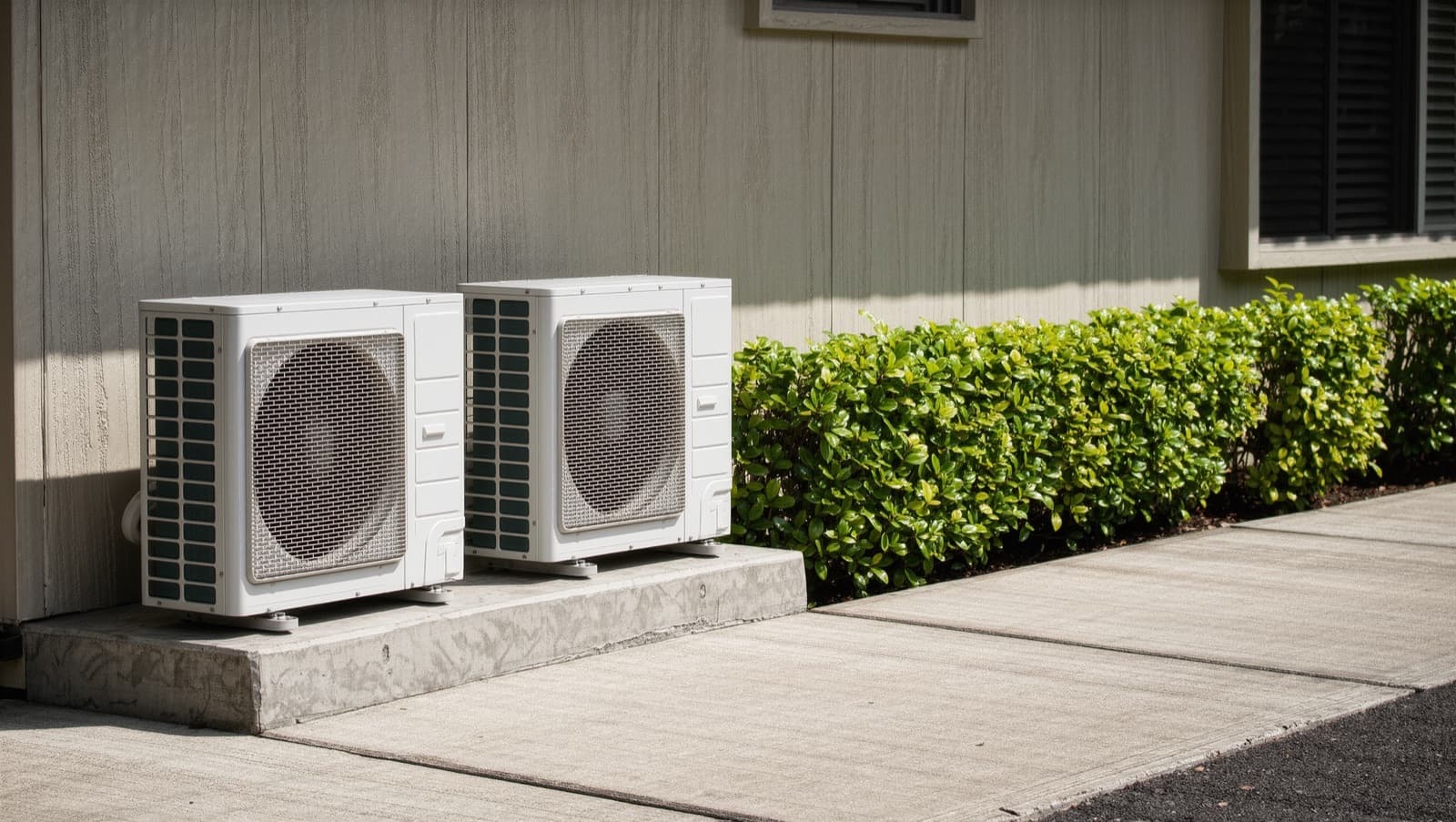
An air conditioner gives out on a hot Honolulu afternoon. Within the hour somebody in that house is on a phone, reading the list of companies Google brings up, and calling one or two. Which companies make that list was settled long before the search, by details nobody at the company has looked at in years.
Most advice written for air conditioning companies is a playbook: claim the Business Profile, build a page for every neighborhood, collect reviews. We did something plainer. We ran the same homepage check on every air conditioning contractor in one city and counted what came back.
How we picked the sites
On September 28 we searched Google Maps for air conditioning contractors in Honolulu. We took the open businesses with a website, five or more reviews, and a rating of 3.5 or better. That came to 13 companies.
Twelve of the sites let the check run. One refused the automated request, so it is out of every count here. Every number below is out of 12.
The checks are the ones our free audit runs on a homepage: title tag, description, headings, images, business markup, sitemap, analytics, and Google's PageSpeed test for phones. Here is the count of sites with each problem:
| What we checked | Sites with a problem |
|---|---|
| No analytics, nothing counts visitors | 7 of 12 |
| Title tag missing or cut off in results | 7 of 12 |
| Images missing alt text | 9 of 12 |
| Description missing or cut off | 4 of 12 |
| Main heading missing or duplicated | 4 of 12 |
| Phone speed score under 50 | 3 of 12 |
| Sitemap missing or silent for a year | 3 of 12 |
| No business markup | 2 of 12 |
None of this is about the refrigerant lines. A company can install clean systems for twenty years and still have a homepage Google cannot read properly.
The best trade we have checked so far
This is the third Honolulu trade we have run through the same check, after the solar installers in September and the plumbers in October. The air conditioning companies came out ahead on almost every line:
- Photos invisible to Google: 62 percent of all homepage images on the solar sites, 44 percent on the plumbing sites, 30 percent here.
- Median phone speed score: 48 for solar, 62 for plumbing, 73 for air conditioning.
- Scores under 50: 8 of 15 solar sites, 4 of 14 plumbing sites, 3 of 12 here.
So this is the cleanest set of sites we have scanned. It still means a majority of the trade has a homepage problem a competitor could fix in an afternoon.
Seven of the twelve are not counting visitors
The one number that does not improve from trade to trade is analytics. Seven of the 12 homepages carry no Google Analytics and no Tag Manager. Nothing on those pages counts who arrived, where from, or what happened next.
That matches the plumbers and the solar installers, where most sites also counted nothing. Whatever else a trade gets right, this blind spot stays.
Analytics is free, and adding it changes nothing a visitor sees. Without it, the phone is the only meter, and whether last month was better than the one before is a guess.
One site has no title tag at all
The title tag is the blue headline a searcher clicks in a result. One of the 12 sites has none, so Google has to invent one. Of the 11 that have one, 6 run longer than 60 characters, about where Google cuts a title to fit the screen.
The shortest title we found is 26 characters. The longest is 157, which shows up cut off mid-word.
The description is the line under the headline. One site has none, so Google picks text off the page and shows that. Of the 11 that have one, 3 run past 160 characters, and the longest is 244. Both lines are text somebody types once.
The worst homepage has 19 blank photos out of 22
The 12 homepages carry 187 images between them. 56 have no alt text, the short caption Google reads in place of a photo it cannot see. That is 30 percent, the best share of the three trades.
The average hides the outlier. Nine of the 12 sites have at least one blank image, and on the worst single homepage, 19 of its 22 images say nothing to search.
An install photo, the clean condenser pad, the new air handler in the closet, is often the most convincing thing on the site. Without the caption, each one is a blank square to Google.
Headings, markup, and a footer stuck in 2021
Eight of the 12 sites have exactly one main heading, the single H1 that tells Google what the page is about. That is what Google expects. One site has none, and three have more than one, which leaves Google guessing.
Business markup, the code that states air conditioning contractor, this address, these hours, is missing on only 2 of the 12. One site has no sitemap, the file that lists which pages exist so Google can find them.
Among the sites that have a sitemap, the newest date inside ranges from September 2024 to September 2026, and two have told Google about nothing new since last year or earlier. One footer still reads 2021, the first date a visitor sees.
A median of 73, and a 100 that earned it
On Google's phone speed test the 12 sites scored from 35 to 100, with a median of 73. Three land under 50, the range Google's tool marks in red as poor. Most visitors arrive on a phone, often standing in a house that is getting warmer.
One site scored a perfect 100, so a fast air conditioning site in this city is clearly possible. The slowest, at 35 and 40, load as if the customer has time to spare.
Four of the sites run on WordPress, two on Duda, and one on Wix. Nothing exotic. These are ordinary builders with ordinary fixes.
One number deserves a warning label. Google's own SEO check in the same tool gave one site a perfect 100, and that site still has problems from this list, because the check does not look at analytics, alt text on every image, or business markup. A 100 there is not a clean bill of health.
What to do with this
Run the same check on your own site at the homepage check; the results show on screen and no email is asked for. If you want the whole thing looked at, every page, the Google listing, the reviews, the speed, and the competitors, there is the free audit.